
Executive Summary
Dow University of Health Sciences implemented the Mentoring Program for Universities (MPU) in accordance with the framework of the National Academy for Higher Education (NAHE), Higher Education Commission (HEC), Pakistan. The initiative was established to promote professional development, leadership, self-confidence, networking and career growth through structured mentoring relationships among university employees.
The programme was supported by a formally constituted Mentorship Program Committee, followed by nomination of 18 mentors and preparation of a list of 46 mentees. Mentors and mentees were connected through a structured process and guided by the programme framework, mentoring modules and prescribed documentation. Sessions were conducted through online and in-person interactions over a three-month cohort. Mentoring agreements and meeting-record forms were maintained as part of programme documentation.
The programme culminated in a closing ceremony and certificate distribution at the Main Auditorium, Dow Medical College, DUHS. Certificates were distributed to mentors, mentees and committee members, with closing remarks by the Vice Chancellor. This report documents the programme’s governance, planning, implementation, record keeping and closure. Quantitative outcome claims are limited to information supported by the available records.
Programme at a Glance
| Programme | Mentoring Program for Universities (MPU) |
| National framework | NAHE–Higher Education Commission (HEC) |
| Host institution | Dow University of Health Sciences (DUHS) |
| Committee constitution | Under approval of the Vice Chancellor |
| Mentors nominated | 17 (Professors, Associate Professors and Higher Administrative positions) |
| Mentees listed | 46 (Assistant Professors, Lecturers and other non-teaching staff |
| Delivery mode | Online and in-person mentoring sessions |
| Closing ceremony | Muin Auditorium, Dow Medical College |
1. Background and Rationale:
The MPU program expands the mentorship strategy that NAHE-HEC advocates to include more universities. Its framework aims to build meaningful relationships between mentors and mentees, develop professional and leadership skills, offer assistance in overcoming institutional obstacles, and promote networking and teamwork. The initiative gave seasoned instructors and administrative staff at DUHS an organized way to help colleagues advance their careers.
2. Formation of the Mentorship Program Committee
The Registrar, DUHS, issued a memorandum constituting the Mentorship Program Committee under NAHE–HEC guidelines, with the approval of the Vice Chancellor. The committee was assigned responsibility for coordinating the programme, selecting mentors and mentees, allocating mentees to mentors, supporting implementation, obtaining feedback and maintaining records for reporting to NAHE–HEC.
| Committee member | Role/designation |
| Prof. Saba Sohail | Chairperson; Dean, Faculty of Medical Sciences and Principal, DMC |
| Prof. Uzma Bukhari | Member; Principal, DIMC; DUHS focal person to HEC |
| Prof. Ramlah Naz | Member; Vice Principal, DIMC |
| Ms. Shehla Naz | Member; Deputy Director, Quality Enhancement Cell (QEC) |
| Dr. Samra Waheed | Secretary; Assistant Professor of Pathology, DMC |
The committee memorandum specified key implementation milestones: selection of mentors, selection and allocation of mentees, commencement of mentoring sessions and completion of the first cohort within 3 months of starting program. It also required feedback collection and maintenance of prescribed records.
3. Selection and Nomination of Mentors
DUHS formally nominated 18 mentors representing a range of academic, clinical, public-health, dental and administrative disciplines. The email was sent to everyone eligible to be a mentor, they nominated themselves voluntarily and they were selected by the committee members under the supervision of honorable Vice Chancellor. This multidisciplinary composition was intended to provide mentees access to relevant professional experience and guidance across different areas of the university.
- Prof. Dr. Hussain Haroon — Medicine
- Prof. Dr. Tariq Farman — Cardiology
- Prof. Dr. Danish Haseen — Biochemistry
- Prof. Dr. Naseem Ahmed — Pathology
- Prof. Dr. Nawaz Lashari — Cardiology
- Prof. Zafar Iqbal Hydrie — School of Public Health
- Prof. Dr. Sahar Mubeen — Anatomy
- Prof. Dr. Ambreen Qamar — Physiology
- Prof. Dr. Fatima Rizvi — Pharmacology
- Prof. Dr. Ramlah Naz — Forensic Medicine
- Dr. Aisha Abdul Haq — Anatomy
- Dr. Shazia Nazar — Physiology
- Dr. Saba Alkhairy — Ophthalmology
- Dr. Mehreen Fatima — Forensic Medicine
- Dr. Madiha Pirvani — Science of Dental Materials
- Mr. Zahid Mustafa — Administration, DIKIOHS
- Mr. Nasrullah — School of Public Health
4. Selection and Allocation of Mentees
A consolidated list of 46 mentees was prepared for the DUHS cohort. The mentees nominated themselves voluntarily through their departmental heads, we received 110 applications, the committee members with the guidance of VC, selected 46 of them (all selected were females). The list included faculty members and staff at different career stages and from a range of departments and institutional units. Allocation of mentees to mentors was documented separately to support structured and focused mentoring relationships. The programme framework recommends matching with consideration of professional skills, experience, goals and compatibility, while limiting the number of mentees per mentor to support personalized guidance.
The final mentee list and mentor–mentee allocation record are retained as supporting programme documents. Individual names and contact details are not reproduced in the main report to keep the narrative concise and protect routine personal information; the approved lists may be appended for internal institutional use where required.
5. Programme Structure and Modules
The programme was organized as a three-month cohort and followed the mentoring framework and tools supplied under NAHE–HEC. The modules and mentoring resources focused on professional skills, reflective practice and leadership development. The module allocation sheet identified mentors against selected module areas, including the following core topics:
- Communication Skills
- Conflict Resolution, Problem Solving and Decision Making
- Leadership Development, Ethics and Integrity
- Digital and AI Tools
The broader framework also emphasizes goal setting, trust-building, feedback, networking, personal development, academic and professional counselling, health and wellness, career development, and celebration of progress. Mentoring conversations were intended to be guided by mentee goals and mutually agreed actions rather than functioning solely as didactic teaching sessions.
6. Implementation of Mentoring Sessions
Mentoring interactions were conducted over the three-month programme period through a combination of online and in-person sessions. This blended approach provided flexibility for participants across departments and institutional locations while allowing direct engagement when feasible. The programme framework envisages regular contact, with at least six contact sessions during a cohort and sessions of at least one hour. Sessions were intended to support progress toward agreed mentee goals, address professional or institutional challenges, encourage reflection and identify practical next steps. Mentors and mentees were expected to maintain confidentiality and adhere to the relevant university and HEC policies and codes of conduct.
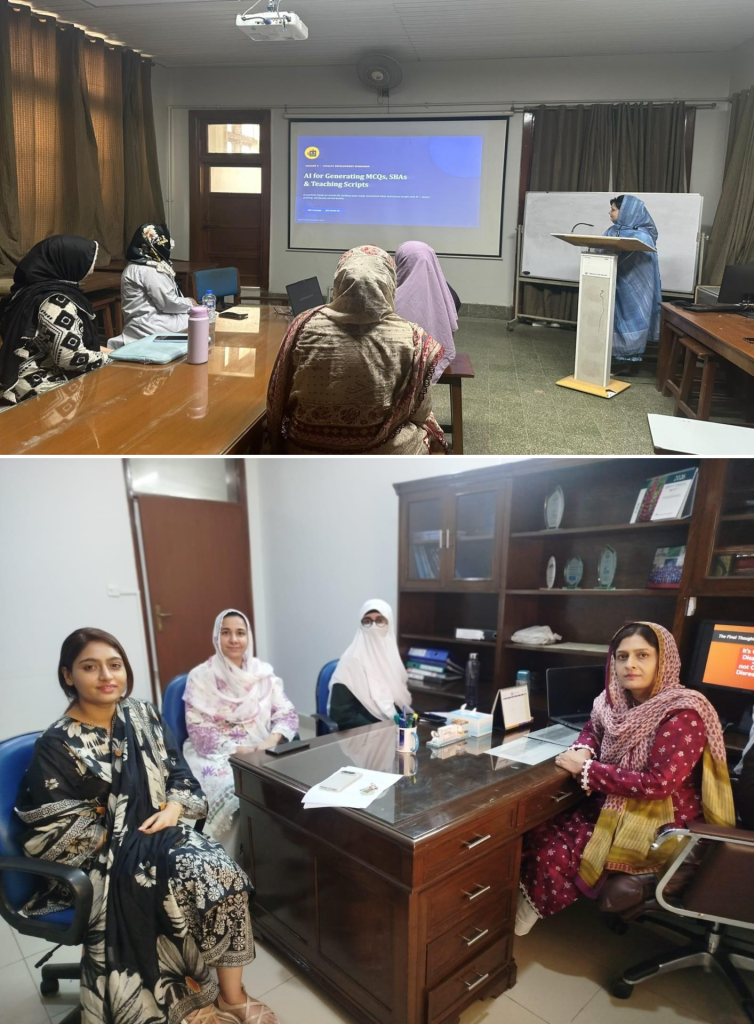
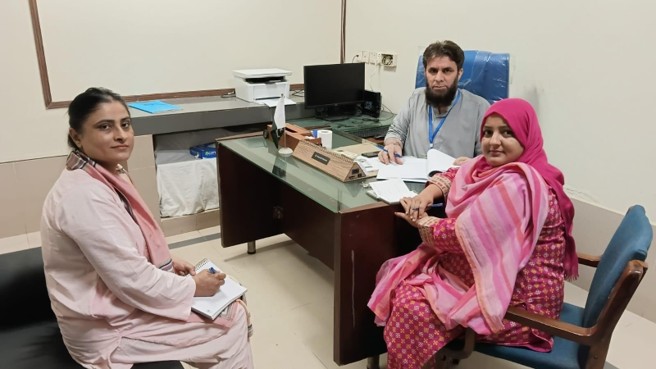
Mentors and mentees engaging in structured mentoring sessions during the DUHS MPU cohort.
7. Forms, Agreements and Record Keeping
Programme documentation included mentoring agreements and records of mentoring meetings. The prescribed forms provide a mechanism to document the mentor and mentee details, agreed responsibilities and boundaries, programme duration, potential conflicts of interest, goals, progress, key discussion points, agreed actions and end-of-programme reflections. Consolidated feedback forms are also included in the NAHE–HEC documentation framework. The uploaded project folder contains a collection of mentoring agreements and meeting-related forms, including records filed under the mentoring form folders. These records provide evidence of documentation activity.
8. Closing Ceremony and Certificate Distribution
The programme was formally celebrated through a Closing Ceremony and Certificate Distribution at the Muin Auditorium, Dow Medical College, DUHS. The event brought together university leadership Vice Chancellor, Pro Vice Chancellor, Principals, the Mentorship Program Committee members, mentors and mentees to acknowledge the completion of the cohort and recognize participants’ contributions.
The programme included an opening and welcome, remarks by the Chairperson of the Mentorship Program Committee, a brief overview of MPU and its modules, certificate distribution to mentors, mentees and committee members, closing remarks by the Vice Chancellor, and a group photograph. The ceremony served as a formal close to the initiative and an opportunity to recognize the time and commitment contributed by participants.
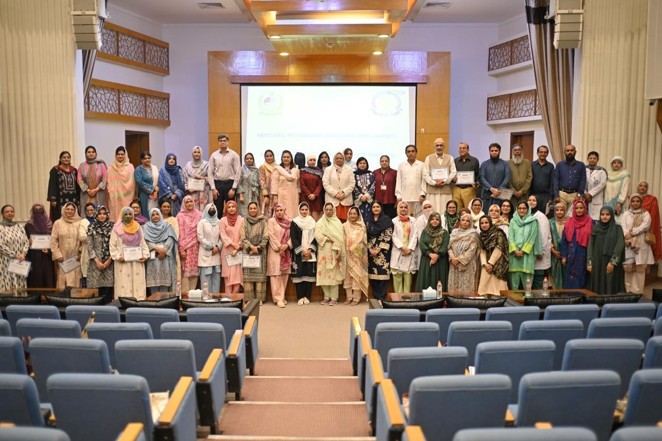
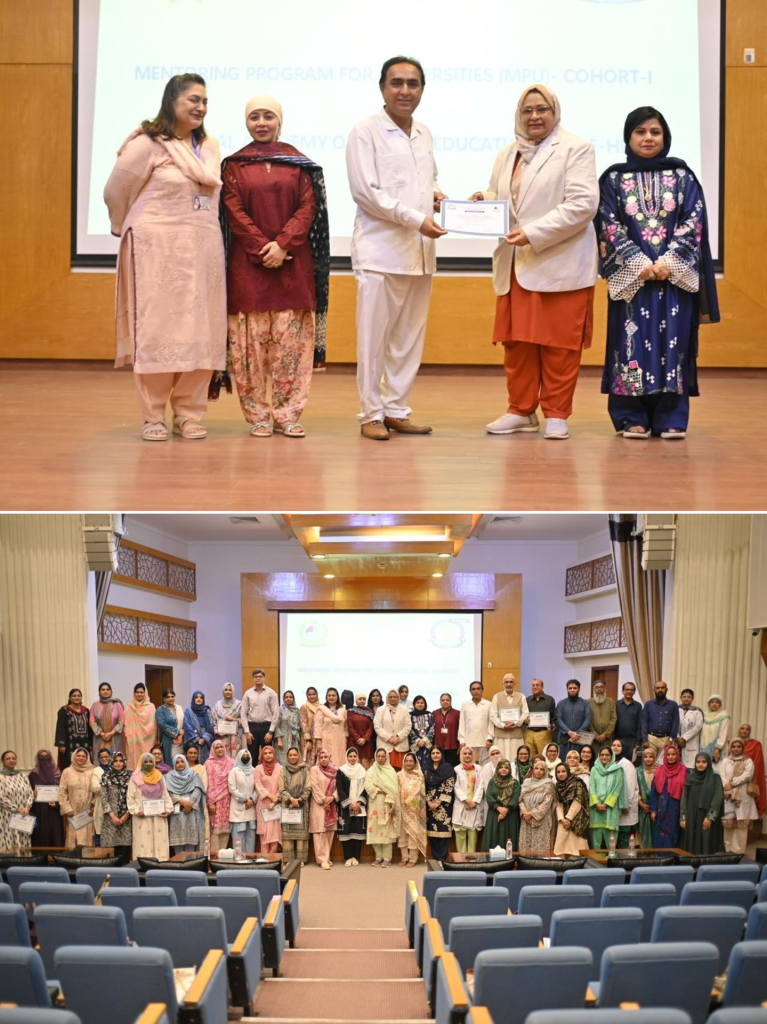
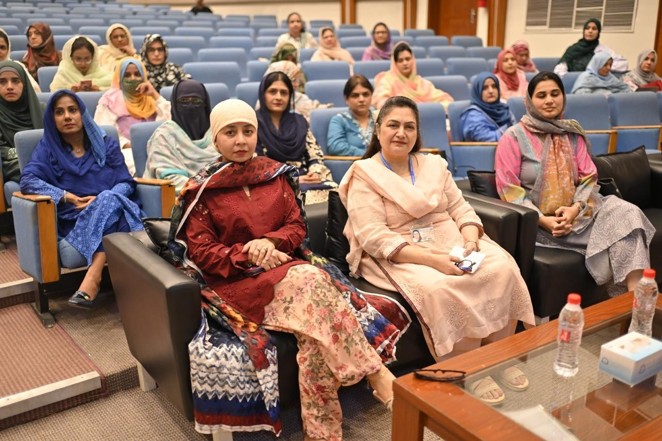
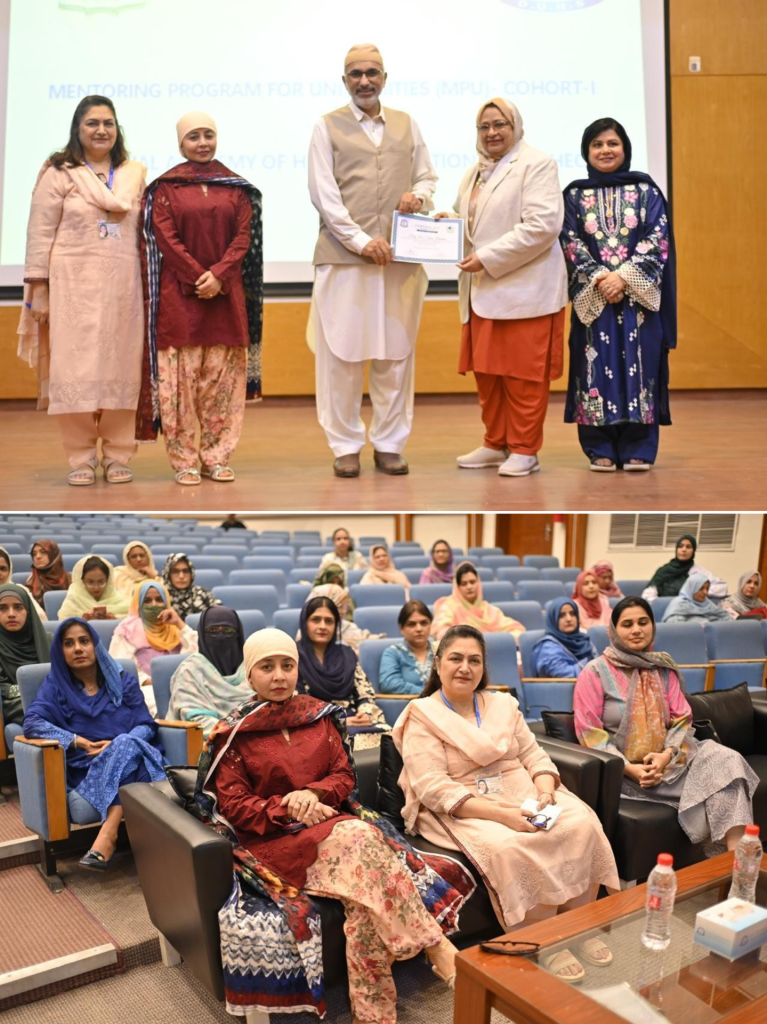
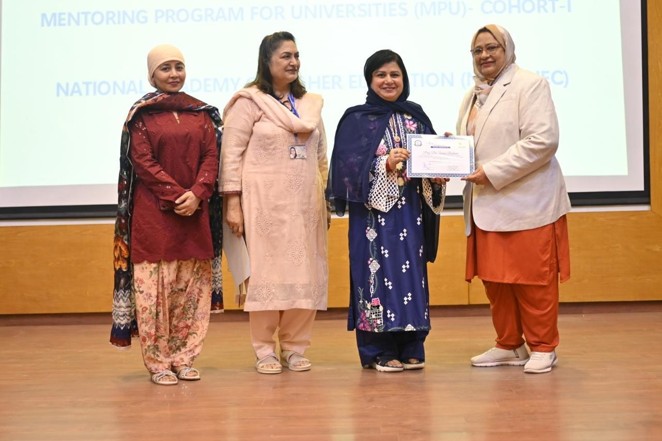
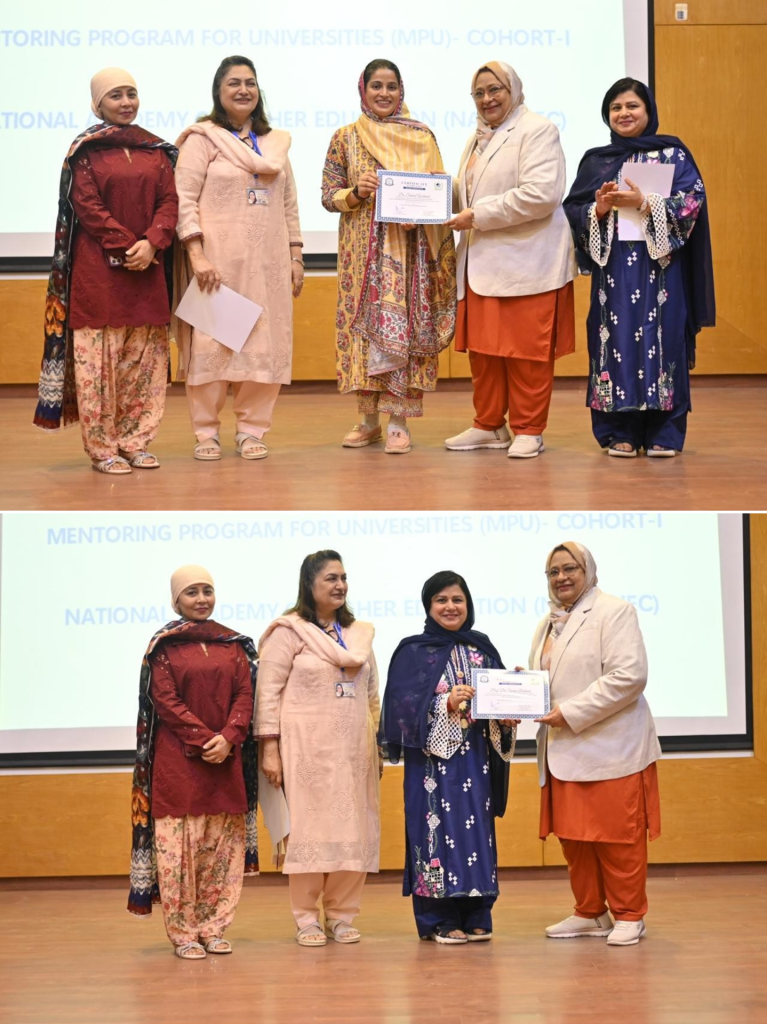
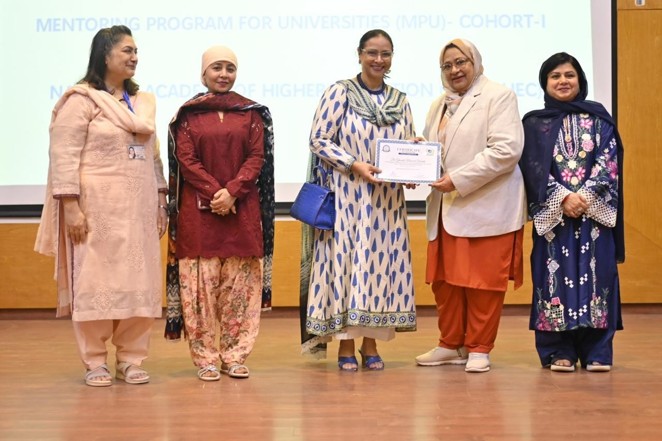
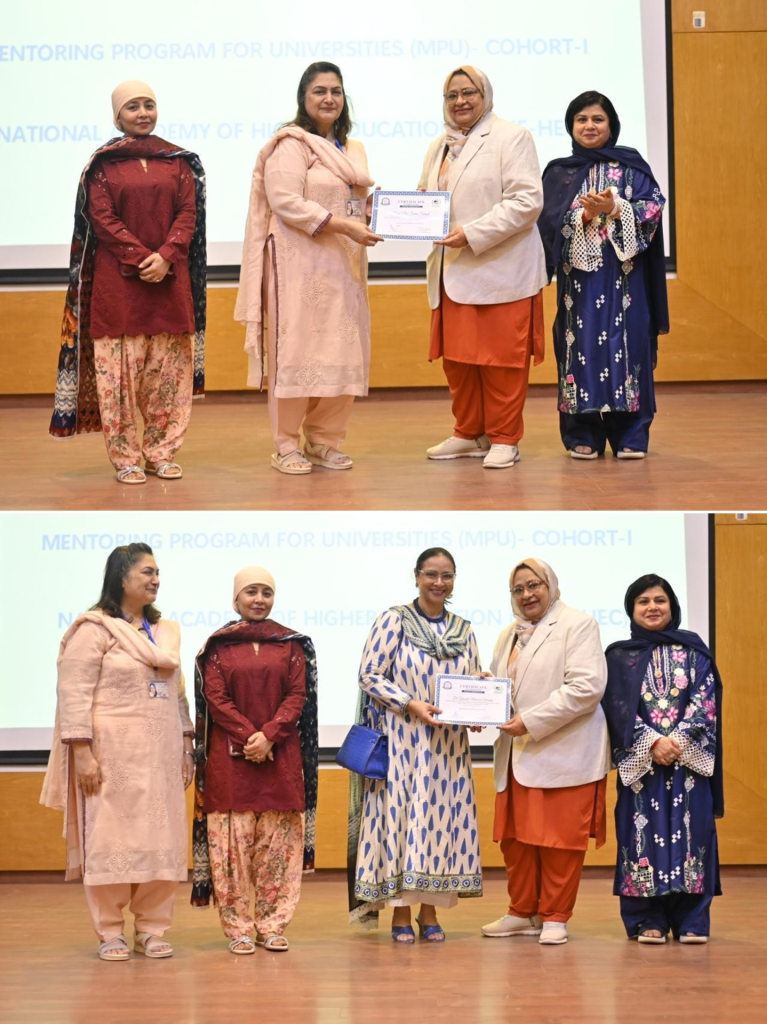
DUHS leadership and programme participants at the MPU closing ceremony and certificate distribution
9. Key Outputs and Achievements
- A Mentorship Program Committee was formally constituted with the approval of the Vice Chancellor and defined implementation responsibilities.
- Seventeen mentors were nominated across academic, clinical, public-health, dental and administrative disciplines.
- A consolidated list of 46 mentees was prepared and a mentor–mentee allocation record was maintained.
- The programme was organized as a three-month cohort with online and in-person mentoring interactions.
- Programme modules and prescribed mentoring tools were used to structure goal setting, discussion, reflection and follow-up.
- Mentoring agreements and session documentation were collected and retained in the project folder.
- A closing ceremony took place, with certificates distributed to mentors, mentees and committee members.
10. Conclusion
The DUHS implementation of the Mentoring Program for Universities established a formal structure for mentoring through committee governance, nomination of mentors, identification and allocation of mentees, a defined three-month programme, blended mentoring interactions and prescribed documentation. The closing ceremony marked the completion of the cohort and recognized the contribution of participants. Continued institutionalization, consistent documentation and systematic feedback will strengthen the programme and support improvement in subsequent cohorts.